

Furry family members mean almost as much to you as their human counterparts – if not just as much. Why wouldn’t you, therefore, give them all the same tools to live long, stay strong and experience maximum health?
Of course you would, and vaccines are an inescapable part of any pet health plan. They help animals fight disease before it takes hold, and keep pet populations as a whole safe from infection. To see exactly why vaccines are so important and how best to ensure your pet’s safety, it’s critical to understand how they work.
Here are some of the most common questions, and their answers.
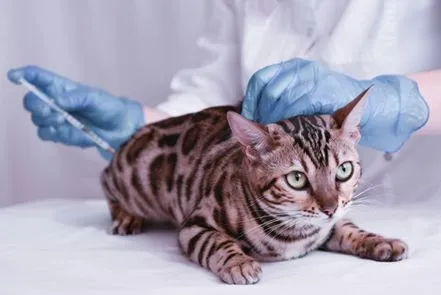
How Do Vaccines Work?
Vaccines administer a fragment of a pathogen to a pet, so that their immune system can “learn” to fight it. When a virus or bacteria enters the animal’s body for the first time, they will not possess an immunity, but introducing the disease prompts their system to manufacture antibodies to help fight it, explains the American Veterinary Medical Association.
Those antibodies then live in their bloodstream from then on, so should they encounter that pathogen in real life, full-strength, they will already have the tools to fight it.
Will My Pet Be 100 Percent Immune?
This is a tricky question and depends on many things including your pet’s immune system, their exposure to infections, and the efficacy of the vaccines being used. At Skye Ridge Veterinary Hospital, we only use vaccines with multi-year studies that prove their longevity and efficacy. Once your pet goes through their initial series of vaccines as a puppy or kitten, the type and frequency of their vaccines are given on a core schedule, with additional vaccines based on any increased lifestyle risks. Our goal is to reduce the number and frequency of vaccines while providing the best immunity and protection for your pet.
While we use the highest quality and studied vaccinations at Skye Ridge Veterinary Hospital, no vaccine is perfect which is why the concept of “herd immunity” is so important. When the entire population susceptible to a particular disease is vaccinated, the disease can’t find a foothold. Therefore, even if an animal didn’t have 100 percent immunity, it wouldn’t matter, because other animals couldn’t get infected and pass it on.
However, today’s reports show that not nearly enough animals are getting vaccinated. Let’s all work to change that.
Which Vaccines Does My Pet Need?
Your pet needs “core” vaccines and may need “non-core” vaccines. Core vaccines for dogs include canine parvovirus, canine distemper, infectious canine hepatitis and rabies. Core inoculations for cats include feline panleukopenia, feline calicivirus, feline rhinotracheitis and rabies.
Depending on your individual dog or cat, we may recommend other vaccines as well. These “non-core” vaccines are lifestyle dependent and your pet’s risk will be determined during our exam. This is why it is important to tell us about your pet’s daily environment and hobbies. Typically, these include dog vaccines such as Lyme and Influenza and cat vaccines such as feline leukemia.
Are There Side Effects to Vaccinating?
Usually, no. Vaccines are safe and well-vetted, and the efficacy through the years has only improved. At most, pets may experience a bit of mild fever or discomfort associated with the injection they’ve received. In rare cases, however, you may notice a serious allergic reaction: itching and swelling of the skin and face, vomiting and diarrhea, or difficulty breathing. If you notice any of this, please seek veterinary assistance right away.
Mostly, though, vaccinations are a routine part of any pet’s life, and there’s nothing for you to worry about.
